

Best Natural Sleep Aids 2026: Top Picks for Better Sleep
Table of Contents
- Quick Comparison: Best Natural Sleep Aids for 2026
- How Natural Sleep Aids Work
- CBD for Sleep and Relaxation: What the Evidence Shows
- Best Natural Sleep Aids for Shift Workers
- Health Canada Natural Health Product Regulations: What to Know
- Safety, Side Effects, and When to See a Doctor
- Frequently Asked Questions
Last Updated: September 13, 2026
Quick Comparison: Best Natural Sleep Aids for 2026
Natural sleep aids are non-prescription substances, including melatonin, magnesium, herbal extracts, and cannabinoids, that support sleep onset and sleep quality without a pharmaceutical prescription. Interest in these options keeps climbing, and the market has responded with a crowded shelf of gummies, capsules, and tinctures that all promise the same thing. This guide from Daddy's Cannabis cuts through the noise.
Below is a side-by-side look at the options that matter most for adults who want better sleep without a prescription.
| Option | Active Ingredients | Typical Use | Best For |
|---|---|---|---|
| Melatonin | Synthetic or natural melatonin | 30-60 min before bed | Jet lag, shift changes |
| Magnesium glycinate | Chelated magnesium | Evening, daily | Muscle tension, restless legs |
| Herbal blends | Valerian, chamomile, passionflower | 30-60 min before bed | Mild sleep latency issues |
| CBD + CBN | Cannabidiol, cannabinol | 60 min before bed | Racing thoughts, nocturnal awakenings |
| L-theanine | Amino acid from tea | 30-60 min before bed | Stress-driven sleeplessness |
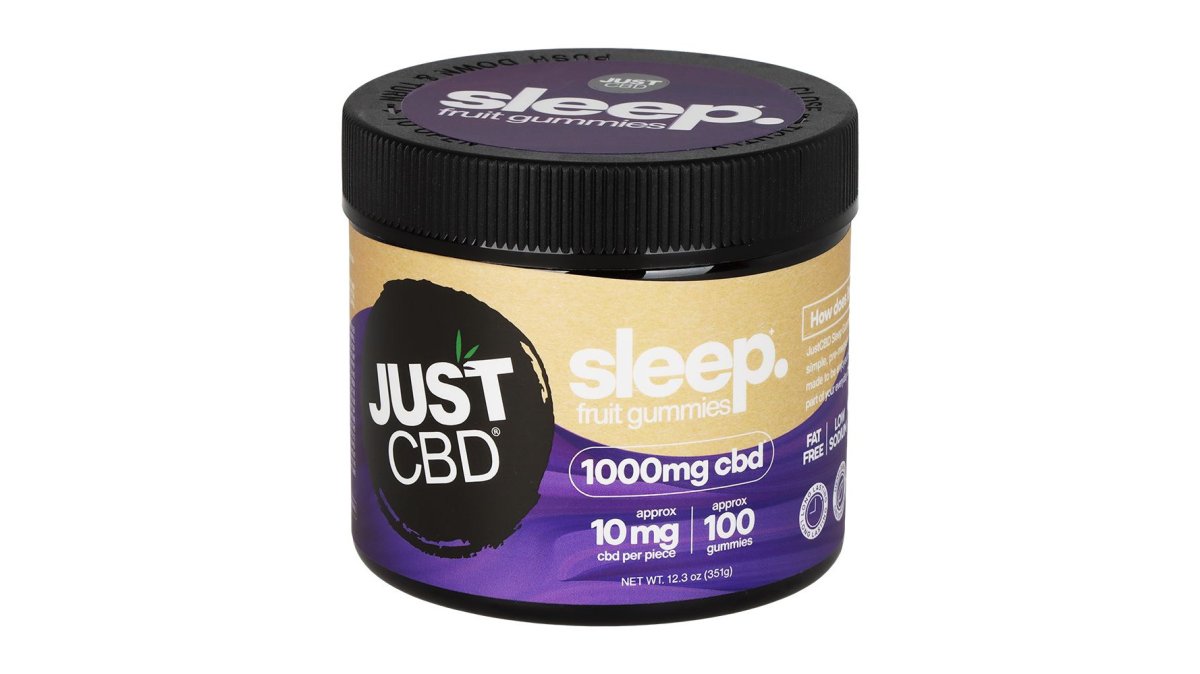
What matters most is matching the aid to your sleep problem. A person who lies awake with a racing mind needs a different approach than someone who falls asleep fine but wakes at 3 a.m.

How Natural Sleep Aids Work
Natural sleep aids do not knock you out. They nudge one of three systems: the circadian clock that sets sleep timing, the GABA-ergic system that quiets neural activity, or the arousal system that keeps stress and muscle tension switched on. Knowing which system your sleeplessness runs through is the difference between a supplement that works and one that sits in your cabinet.
Match the Aid to Your Sleep Problem
Sleep complaints are not interchangeable. A person who lies awake for an hour with a racing mind has a different problem than someone who drops off in ten minutes but wakes at 3 a.m. and cannot return to sleep. The table below maps the most common patterns to the ingredients with the strongest rationale for each.
| Sleep pattern | Likely driver | First-line natural options | Typical dose | Timing |
|---|---|---|---|---|
| Trouble falling asleep (sleep-onset insomnia) | Circadian delay, pre-bed arousal | Melatonin, L-theanine, chamomile | Melatonin 0.5-3 mg; L-theanine 100-200 mg | 30-60 min before bed |
| Trouble staying asleep (maintenance insomnia) | Nocturnal awakenings, cortisol spikes | Magnesium glycinate, CBD + CBN, valerian | Magnesium 200-400 mg elemental; CBD 25-50 mg | 60 min before bed |
| Stress-driven sleeplessness | Sympathetic overdrive | L-theanine, passionflower, ashwagandha | L-theanine 200 mg; passionflower 250-500 mg | 30-60 min before bed |
| Shift work or jet lag | Circadian misalignment | Timed melatonin, light therapy | Melatonin 0.5-3 mg | At target bedtime in new time zone |
| Muscle tension or restless legs | Magnesium deficiency, nerve hyperexcitability | Magnesium glycinate or citrate | 200-400 mg elemental magnesium | With evening meal |
Doses above reflect ranges commonly cited in natural health product monographs and clinical literature; individual response varies, and lower starting doses are always the safer entry point.
Melatonin and Your Sleep-Wake Cycle
Melatonin is a hormone the pineal gland releases in response to darkness, and it governs the timing of your circadian rhythm rather than the depth of your sleep. Taken as a supplement, it shortens sleep latency, the time it takes to fall asleep, most reliably when your schedule has shifted, such as after a flight across time zones or a rotation onto night shifts.
The counterintuitive part is dose. A physiologic dose of 0.5-1 mg taken at the right hour often outperforms a 5-10 mg dose taken late, because a large dose taken close to your natural wake time can push your rhythm the wrong direction. The National Center for Complementary and Integrative Health overview of melatonin notes that timing and dose matter more than brand. Melatonin has a short half-life of roughly 30-50 minutes, which is why extended-release formulations exist for people who wake in the middle of the night.
Magnesium, Herbal Remedies, and Relaxation
Magnesium is a cofactor in more than 300 enzymatic reactions, including the regulation of GABA receptors and muscle contraction. The glycinate form is chelated to the amino acid glycine, which is itself mildly inhibitory, and it is the form most people tolerate without digestive upset. Magnesium citrate absorbs well but draws water into the bowel; magnesium oxide is cheap and poorly absorbed, which is why it is the form most likely to cause loose stools.
Herbal remedies work through different pathways. Valerian root interacts with GABA-A receptors and is best studied for sleep latency, with effects that build over one to two weeks rather than appearing on night one. Chamomile contains apigenin, a flavonoid that binds benzodiazepine sites on GABA-A receptors. Passionflower raises GABA levels and is often used for anxiety-driven sleeplessness. L-theanine, an amino acid found in tea, increases alpha-wave activity in the brain, a relaxed-but-alert state that many people find useful in the hour before bed without next-day grogginess.
Why Onset Speed Differs by Ingredient
One reason people abandon natural sleep aids too early is mismatched expectations. Melatonin can shift sleep timing within a night or two. L-theanine and chamomile act within 30-60 minutes. Magnesium and valerian need consistent nightly use for one to two weeks before their full effect appears. If you judge every option on a two-night trial, you will discard the ones that work slowly and keep the ones that work fast but shallowly.
CBD for Sleep and Relaxation: What the Evidence Shows
CBD for sleep and relaxation is one of the most searched topics in natural wellness, and the evidence is promising but not settled. Cannabidiol does not act as a sedative in the way melatonin does. Instead, it appears to calm the anxiety and physical tension that keep people awake, largely through indirect modulation of the endocannabinoid system rather than direct binding to CB1 receptors.
CBD Versus CBN: Different Jobs
CBD and CBN are often bundled in nighttime products, but they are not interchangeable. CBD is the better-studied molecule for anxiety-driven sleeplessness and has a wide dose range, many users find 25-50 mg effective, while others need 100 mg or more. CBN, a minor cannabinoid that forms as THC oxidizes, is frequently marketed for sleep maintenance. The evidence for CBN is thinner than for CBD, and much of what circulates online traces back to a single small older study. A common pattern is pairing 25-50 mg CBD with 5-10 mg CBN for people who wake in the middle of the night.
Full-spectrum hemp products also contain trace terpenes such as myrcene and linalool, plus flavonoids, which many producers argue contribute to a broader effect than isolated CBD. That claim is plausible but not firmly established, so treat it as a reasonable hypothesis rather than a proven mechanism.
Onset, Duration, and What to Expect
Inhaled or sublingual CBD reaches the bloodstream within 10-15 minutes; edible gummies can take 60-90 minutes and peak later, which is why timing matters. A gummy taken at 11 p.m. may not peak until after midnight. For sleep, most users take CBD 60 minutes before bed. Effects typically last four to six hours, which is shorter than a full night for many people, one reason CBN and extended-release formats are popular for maintenance.
Potency, Testing, and What to Look For
The practical questions are potency and testing. A certificate of analysis from a third-party lab, often shortened to COA, tells you exactly what is in the bottle: cannabinoid content, terpene profile, and whether heavy metals, pesticides, or residual solvents were detected. A COA that lists only total cannabinoids without a full panel is a partial answer. Daddy's Cannabis offers products with COA lab results available, so you can check cannabinoid content before you buy.
Interactions and Cautions
CBD inhibits several cytochrome P450 enzymes, which means it can raise blood levels of some prescription drugs, including certain blood thinners, anti-seizure medications, and immunosuppressants. That interaction is easy to miss because CBD is sold as a wellness product rather than a drug.
Cycling to Avoid Tolerance
A question competitors rarely address is tolerance. Some users find that nightly CBD loses effect over weeks, and a common approach is to cycle, five nights on, two nights off, or to rotate between CBD, magnesium, and an herbal option. Cycling also reduces the risk of leaning on any single product as a permanent crutch. If you need a sleep aid every night for more than three weeks, that is a signal to talk to a healthcare provider about the underlying cause rather than to escalate the dose.
Best Natural Sleep Aids for Shift Workers
Natural sleep aids for shift workers need to solve a different problem than they do for everyone else. Rotating schedules break the circadian rhythm, so the goal is realigning the sleep-wake cycle rather than simply feeling drowsy.
The most effective approach combines three things:
- Timed melatonin, taken at the same point in your "night" every rotation
- A dark, cool sleep environment with blackout curtains or a sleep mask
- A wind-down routine that starts 60 minutes before your scheduled sleep
For daytime sleep after a night shift, CBD and CBN products can help quiet a busy mind without the hangover feeling that some antihistamine-based aids produce. Pair them with consistent light exposure when you wake, since light is the strongest signal your body uses to reset its clock.

Health Canada Natural Health Product Regulations: What to Know
Health Canada natural health product regulations govern how melatonin, magnesium, valerian, and most herbal sleep aids are licensed and sold. Products that make health claims need a Natural Product Number, or NPN, printed on the label (Natural Health Product Licensing Bulletin). That number means the product has been reviewed for safety, quality, and the claims it makes.
The rules matter to buyers for two reasons. First, an NPN tells you the product passed a review rather than simply appearing on a shelf. Second, licensed products must list medicinal ingredients and doses clearly, so you can compare formulations directly. For cannabis-based products, the framework is different, and you can review the Health Canada guidance on cannabis and health products to understand how those items are regulated separately.
When you shop, look for a label that states the medicinal ingredient and its amount per serving. A product that hides behind a "proprietary blend" without listing doses is one to skip.
Safety, Side Effects, and When to See a Doctor
Natural does not automatically mean risk-free, and side effects are real. Melatonin can cause vivid dreams, next-day drowsiness, and headaches in some people. Magnesium in the wrong form causes digestive upset. Valerian can interact with sedatives and, in a minority of users, causes paradoxical stimulation.
Contraindications matter most for people who are pregnant, breastfeeding, taking blood thinners, or managing a chronic condition. Anyone in those groups should talk to a healthcare provider before starting a supplement.
See a doctor if insomnia persists for more than three weeks, if it interferes with work or daily function, or if it comes with loud snoring, gasping during sleep, or restless legs. Those signs can point to sleep apnea or another condition that no supplement will fix.
Chronic sleeplessness wears you down, and finding a routine that actually works takes trial and error. Daddy's Cannabis carries a focused collection of CBD and CBN sleep products, including melatonin-blended gummies and full-spectrum gelcaps, each with lab results you can review before ordering. The site is built for straightforward browsing and secure Shopify checkout, so you can find what you need without wading through clutter. Get started with Daddy's Cannabis and build an evening routine that helps you find products for better sleep.

Frequently Asked Questions
What is the strongest natural sleep aid?
There is no single strongest option because natural sleep aids work differently for each person. Melatonin is effective for resetting your sleep-wake cycle, while magnesium glycinate supports muscle relaxation. CBD and CBN products, such as the JUST CBD Dreamscape THC Gummies, combine cannabinoids with herbs like ashwagandha and chamomile. The best choice depends on whether you struggle with falling asleep, staying asleep, or both. Start with a low dose and track your results.
Are natural sleep aids regulated by Health Canada?
Yes. Natural health products, including melatonin, herbal remedies, and CBD, fall under Health Canada's Natural Health Products Regulations. Licensed products must carry an NPN or DIN-HM and meet labeling and safety standards. CBD products require authorization before sale. Always check for a product license number and a Certificate of Analysis to confirm quality and potency. Unlicensed products may not meet these requirements.
How do CBD and THC products compare to traditional herbal sleep aids?
Traditional herbal aids like valerian root and chamomile have a long history of use for mild relaxation. CBD and THC interact with your endocannabinoid system, which may influence sleep architecture and relaxation responses. CBD is non-intoxicating, while THC can produce psychoactive effects. Products like the CBN+CBD Daily Rest Gelcaps combine cannabinoids for a targeted approach. Effects vary by individual, so start low and consult a healthcare provider.
What should shift workers look for in a natural sleep aid?
Shift workers often deal with irregular circadian rhythms and sleep latency issues. Look for aids that support circadian alignment, such as melatonin taken at the right time, or non-sedating options like CBD for sleep and relaxation. Avoid products that cause grogginess if you need to wake quickly. A consistent pre-sleep routine and blackout curtains can boost any supplement's effectiveness.
Can I take natural sleep aids every night?
Some are safe for regular use, but others carry dependency or withdrawal risks. Melatonin is generally considered safe for short-term use. Herbal remedies like valerian may lose effectiveness over time. CBD and CBN products are often used nightly, but tolerance can develop. Rotate products or take breaks to maintain effectiveness. If you need a sleep aid every night for more than a few weeks, speak with a doctor.